This guide helps you understand the signs. It cannot diagnose your property, and more than one cause may be present.
Start with the outside clues
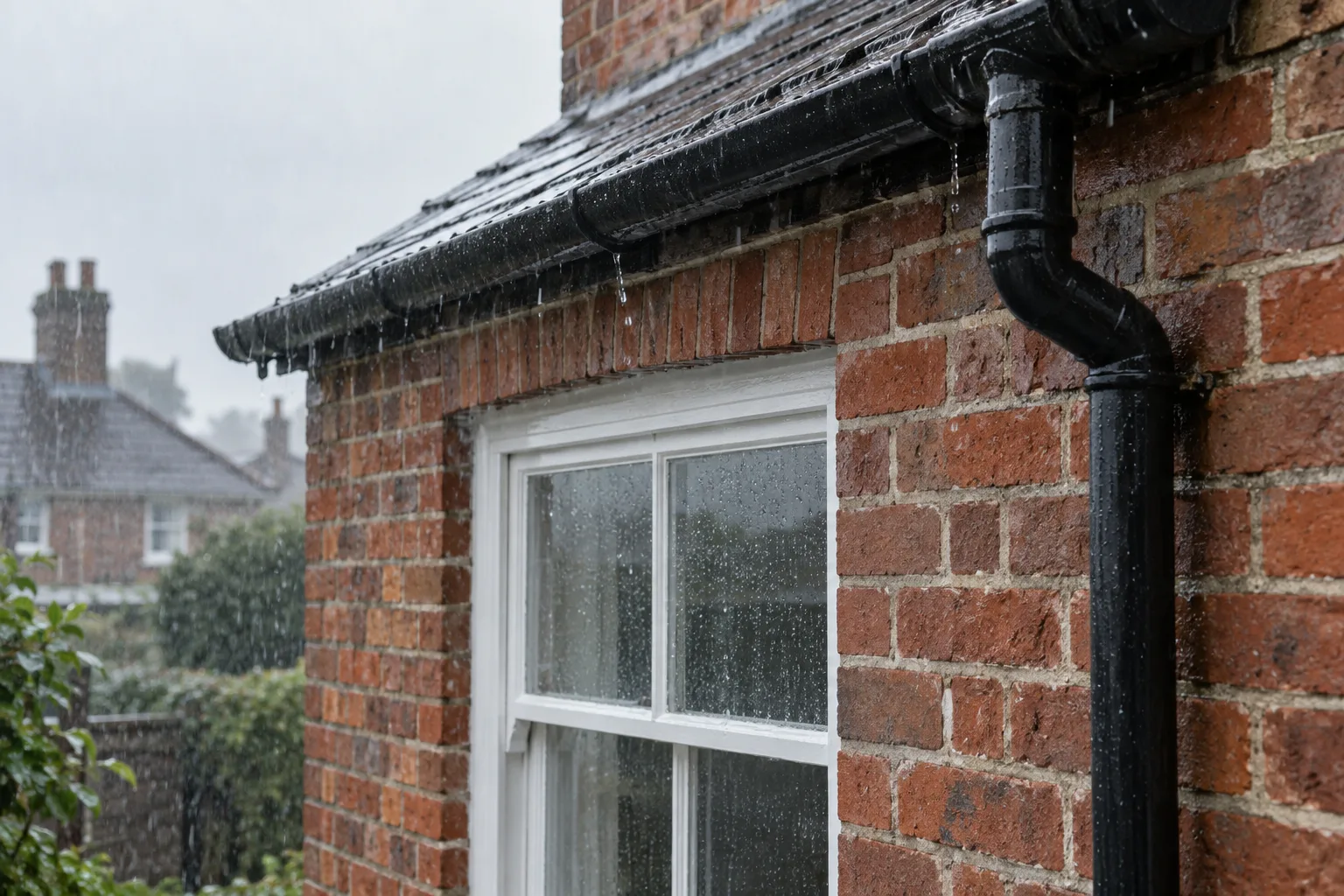
Faulty roofing, overflowing gutters and gaps around windows can allow rain into a building. Look from a safe place at ground level for visible defects and staining. Do not climb ladders or onto a roof to investigate.
Write down when the patch changes, including whether wind-driven rain seems to make a difference. Water can travel through a structure before it becomes visible indoors.
What about rising damp?
A low-level mark or damaged skirting board does not, by itself, confirm rising damp. Plumbing problems, outside ground levels and other moisture sources can produce similar signs.
Before paying for a treatment, ask for an investigation of the cause. Older and traditionally built properties may need a surveyor with relevant moisture and building-construction experience.
What to record before an inspection
- The location and approximate size of the patch, with dated photographs.
- Whether it gets worse after rain, plumbing use or cold weather.
- Any nearby roof, gutter, window or plumbing issues you can safely see.
- Previous repairs, changes to the building and when the problem started.
Who can help?
The appropriate trade depends on the suspected source. A clear roof or gutter defect may need a roofer; an uncertain moisture problem may need a suitably experienced building surveyor.
If you rent, report the issue to your landlord or letting agent promptly. Make the visible signs and any changes clear, even if you cannot identify the cause.
Further reading
The image is illustrative, not a photograph of a diagnosed property. Sources inform this general guide; their inclusion does not imply endorsement.
Not sure where to start?
Work through the signs you’ve noticed and get a useful next step.
Check my symptoms